Can I Give You a Quick Call?
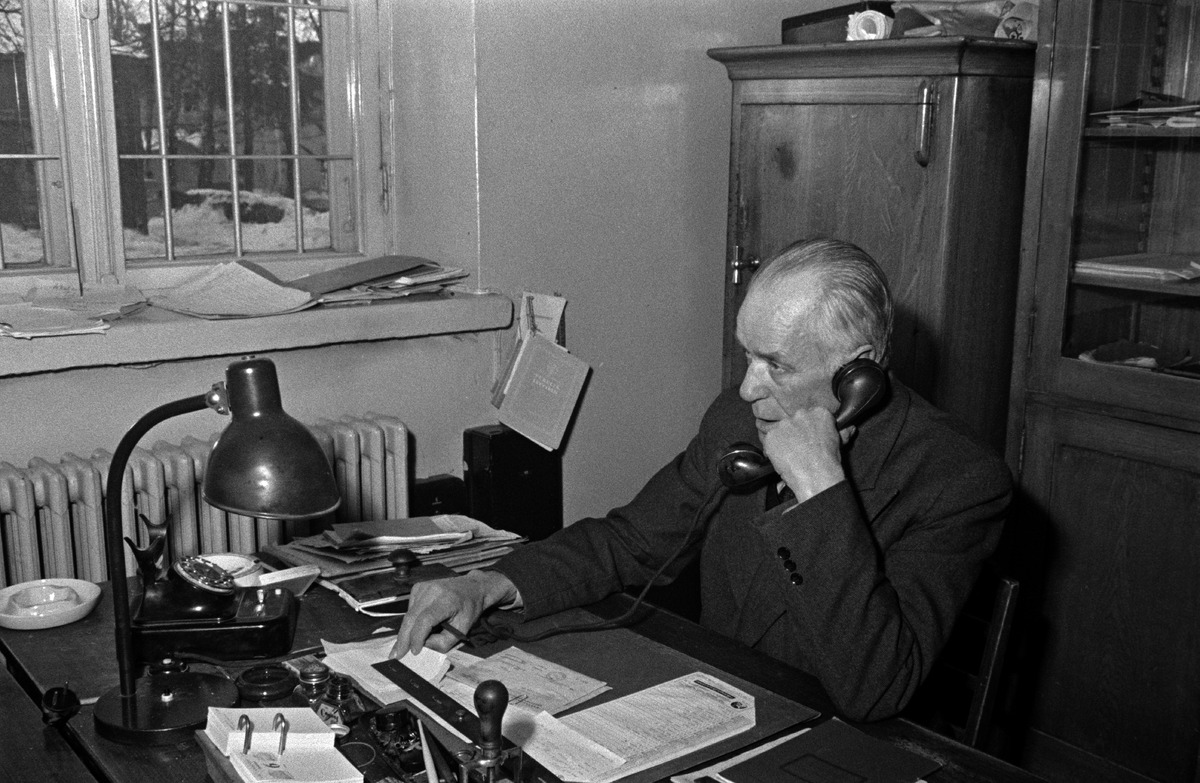
Photo: unknown photographer / Helsinki City Museum, Public Domain Mark. A man on the phone, probably at the Elanto office in Malmi, Helsinki, in 1954.
When a colleague messages me on Slack asking “can I give you a quick call?”, I already know what’s coming.
First, the monologue: several minutes of tangled explanation, barely pausing for breath. Then fifteen minutes of back-and-forth questions, after which I have a rough idea of what it’s all about. Finally, an hour of digging through old messages and documents.
That easily adds up to a couple of hours, and it drains roughly a full workday’s worth of mental energy.
And what is it all about? Well, it varies, but there’s one common thread: my colleague has outsourced their thinking to me.
The problem with the “quick call”
The purpose of a quick call (for the caller) is to spill out information and hope that this somehow makes it clearer. But as with everything else in life, things don’t become clear on their own.
What actually makes things clear is that Someone™ sits quietly by themselves, gathers the material, studies it, makes sense of it and writes a summary. The call did serve as a trigger, but it didn’t help with the actual work at all. On top of that, it interrupted whatever that someone was doing.
Paul Graham recently tweeted that he believes we’re entering a period where not reading or writing is becoming the new smoking: a widespread habit that feels comfortable and effortless, but whose harm we’ll only wake up to years or decades later.
Allow me to save you those decades:
Writing is thinking
Every adult knows that before opening your mouth, it’s a good idea to think, at least briefly, about what you’re about to say. If it’s anything even slightly complicated, it pays to stop and sort it out for yourself first. That way you not only give the other person a better chance of understanding it, you also come across as incomparably smarter!
Sketching out a complex problem, even roughly, forces you to go through it step by step: what has actually happened? Why does it matter? What are we trying to achieve, and how do we get there?
Slightly older readers will remember looking up forgotten foreign words in paper dictionaries before digital ones existed. Surprisingly often, the word came back to you before you found it in the dictionary, and afterwards you remembered it better than before: you had forced your brain to work while searching for it.
Writing does the same thing: it forces us to stop and stay with the problem. It forces us to write painfully slowly, which in turn forces us to genuinely think it through.
After all that, the original problem may already be solved. And if it isn’t, you understand it far better and sound like a professional on the phone, not like a panicked, burned-out telemarketer.
But what about AI?
Does any of this matter in the age of AI? Doesn’t AI think for us, organise and structure, find information?
Yes, and that’s all the more reason why it’s ridiculous that you’re about to make a quick call and breathe your distress down the line. Getting to grips with a topic, gathering material and structuring your thoughts has never been easier in the history of humankind, and you’re not even going to do that? Please.
Of course, you shouldn’t outsource your thinking to AI any more than to a colleague. AI helps, but it doesn’t do the work for you, because the real work is understanding the problem. Once you’ve understood it, AI can check facts, find more information and polish how you put it. That’s then easy to send to your colleague. If a call is still needed, it’s easy to have one based on what you’ve written.
So, can I give you a quick call?
Sure. Just keep in mind that behind every quick call there’s a big pile of thinking. Someone has to do it either way. The only question is who.
So do it yourself before you call. Write the problem out, even clumsily and in bullet points. Polish it with AI if you like, and paste it into Slack right after your “can I give you a quick call?”
Quite often, you’ll realise while writing that no call is needed at all. That’s fine. You’ve just saved us both some time.